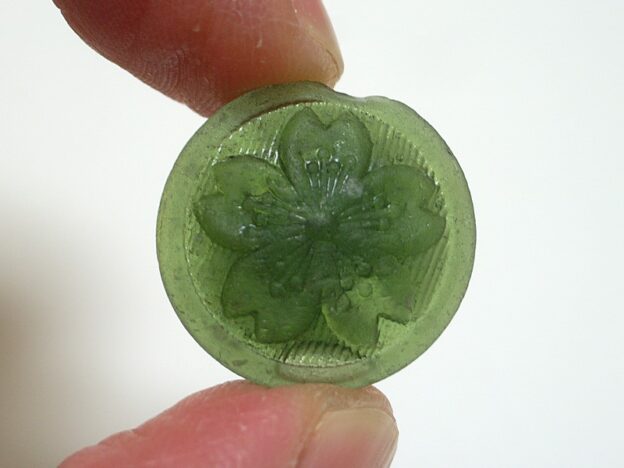
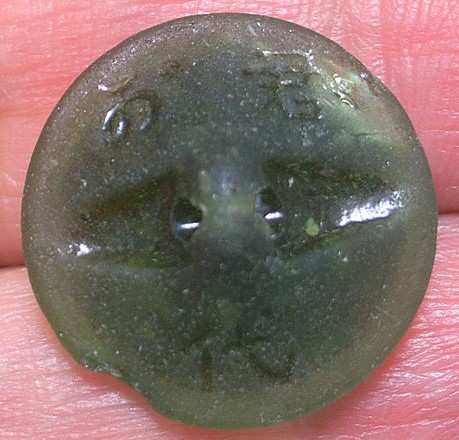
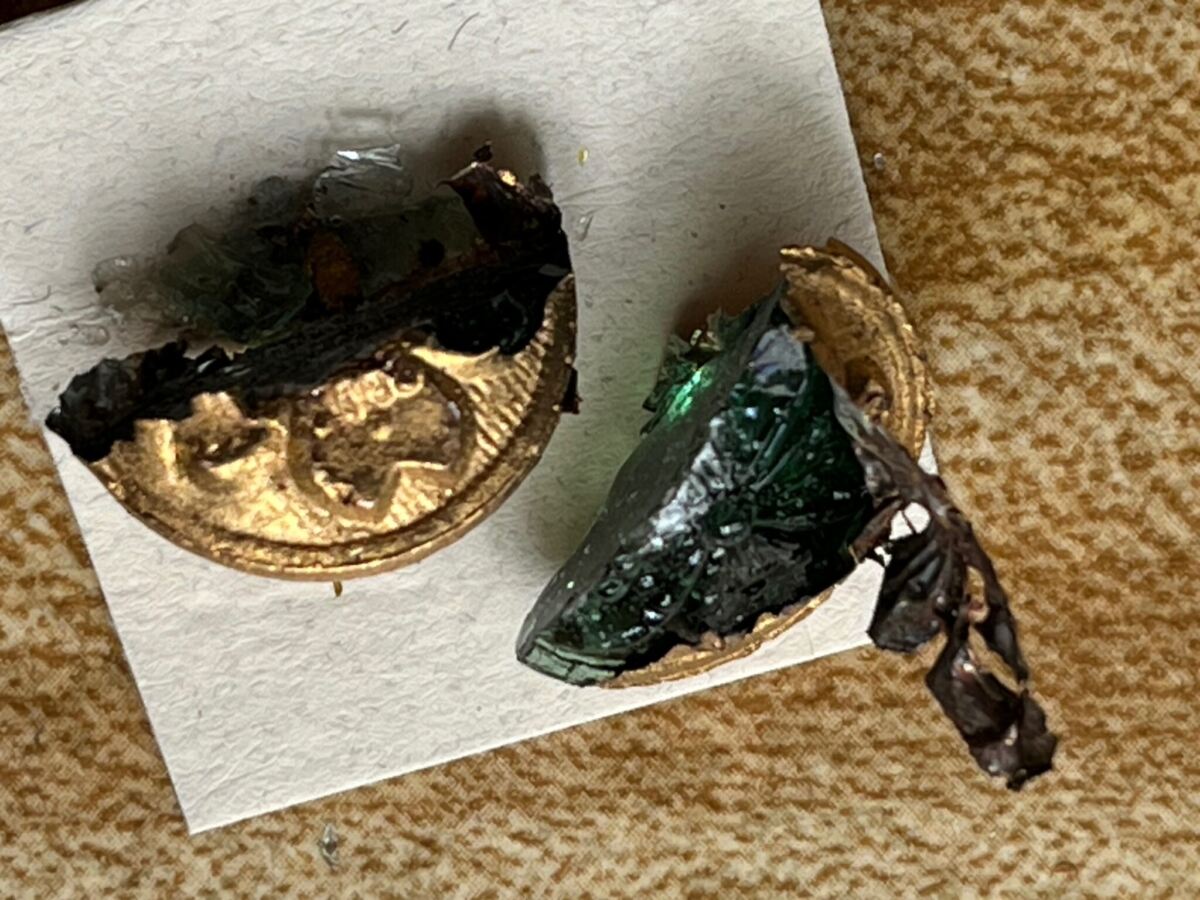
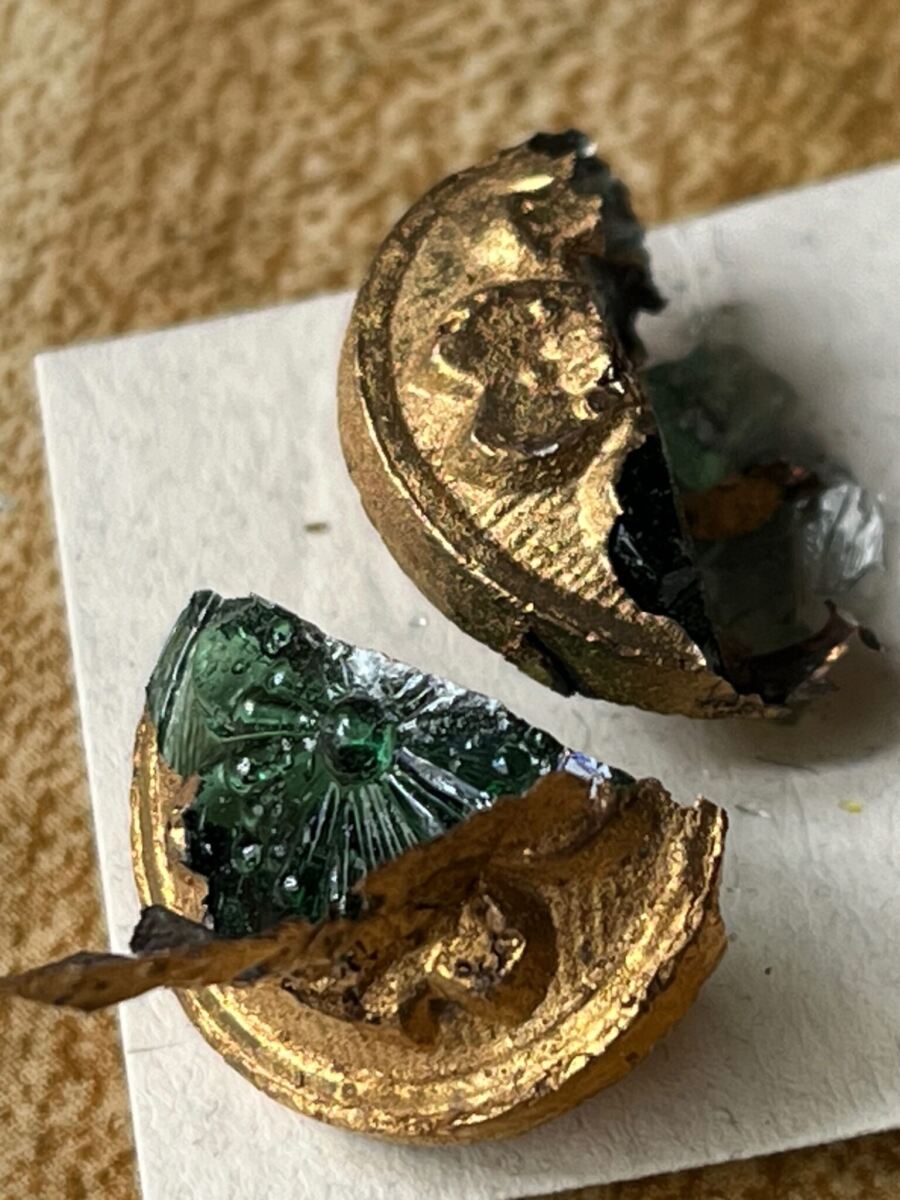
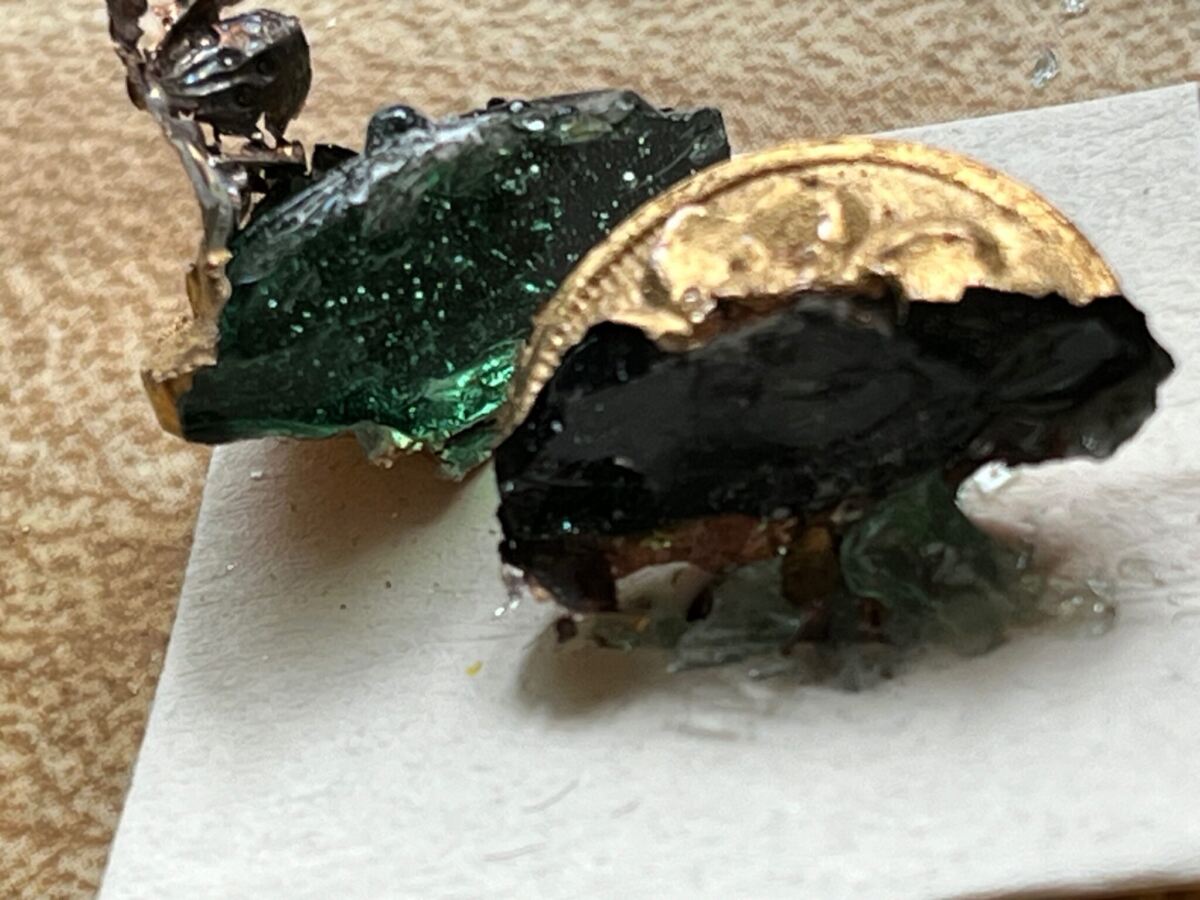
海辺の拾い物、ガラスのボタン。桜の模様からして学生服ボタンと思われます。制服ボタンの裏に君が代の銘が入っているところあたりに当時の教育現場の軍国調の愛国精神がうかがえます。実は最初にブログで見たとき「が」の字が読めませんでした。「ひらがなは一音一字」と定められ、教育現場から変体文字が追放・廃止されたのが明治33年の「小学校令施行規則」であったというあたりからも、このボタンの古さがうかがえます。ボタン愛好家のグループ Western Regional Button Association (WRBA.us) の日本の会員さんが見つけてくださったブログ「花鳥風月のヒロイモノ」の掲載記事でその存在を知りました。
by Kim Stafford
Whereas the world is a house on fire;
Whereas the nations are filled with shouting;
Whereas hope seems small, sometimes
a single bird on a wire
left by migration behind.
Whereas kindness is seldom in the news
and peace an abstraction
while war is real;
Whereas words are all I have;
Whereas my life is short;
Whereas I am afraid;
Whereas I am free—despite all
fire and anger and fear;
Be it therefore resolved a song
shall be my calling—a song
not yet made shall be vocation
and peaceful words the work
of my remaining days.
(英語朗読キム・スタッフォード)
by Kim Stafford
Whereas the world is a house on fire;
Whereas the nations are filled with shouting;
Whereas hope seems small, sometimes
a single bird on a wire
left by migration behind.
Whereas kindness is seldom in the news
and peace an abstraction
while war is real;
Whereas words are all I have;
Whereas my life is short;
Whereas I am afraid;
Whereas I am free—despite all
fire and anger and fear;
Be it therefore resolved a song
shall be my calling—a song
not yet made shall be vocation
and peaceful words the work
of my remaining days.
(Listen to Kim’s voice in English)
The Western Regional Button Association (WRBA.us) is a nonprofit where collectors of sewing buttons come together to share stories and discoveries. In 2022, a WRBA member based in Japan alerted me to a Japanese beachcomber’s blog post featuring a remarkable find: a glass button with an intricate cherry blossom design.The Glass Button’s Enigmatic History
At first glance, the button’s design seemed familiar. Cherry blossoms are a common motif in Japan, often appearing on grade school uniform buttons. However, this find stood out—it was made of glass, not the typical metal. Even more intriguing were the three characters marked on the back: 君が代 (Kimi Ga Yo), which translates as “Your Majesty’s Era.”
Kimi Ga Yo is Japan’s national anthem. Its lyrics originate from a 12th-century anthology of poems, the Kokin Wakashū, and celebrate the longevity of a revered leader:
君が代(Kimi Ga Yo)
Your Majesty’s Time
for thousands,
and thousands
of generations —
as small pebbles become
Rock Majestic —
and on grows moss.
In this poetic context, Kimi refers to a revered figure, a master or lord. The pronoun still carries endearing connotations today, often used to affectionately address a loved one. Ga is a grammatical particle connecting Kimi and Yo, which means “era” or “generation.” Thus, the phrase suggests an enduring legacy, a sentiment that echoes throughout Japanese history and culture.
Wartime Necessity and the Cherry Blossom Motif
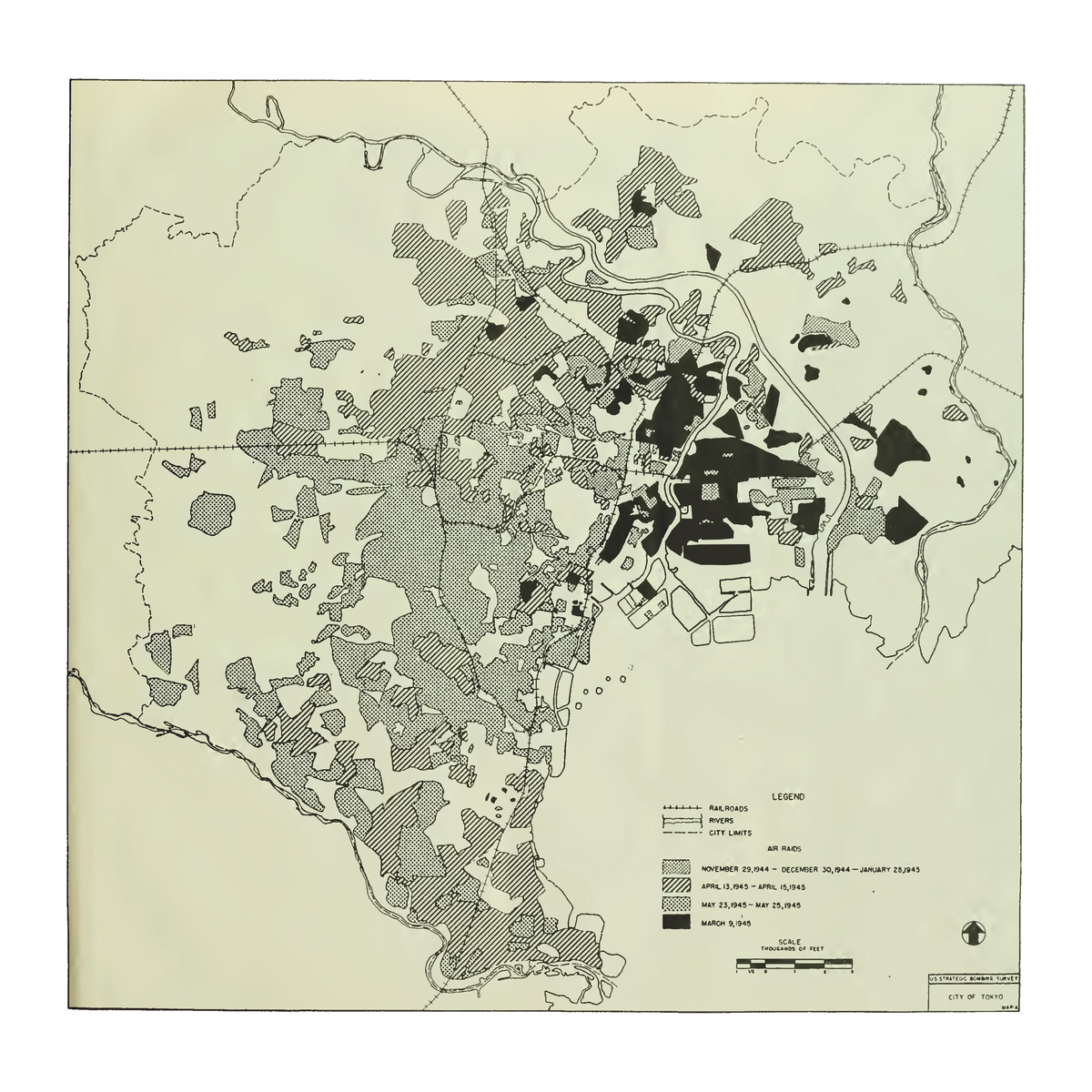
US Strategic Bombing of Tokyo and Miura Peninsula 1944-1945, (Public Domain)
During World War II, Japan faced severe material shortages. A nationwide metal scrap drive meant that essential items, like school uniform buttons, were made from crude pottery instead of metal. This glass button, likely from the same era, raises questions about its origin: Was it crafted in a glass factory to compensate for the lack of metal? Which school used it? And what events led to it being washed ashore decades later?
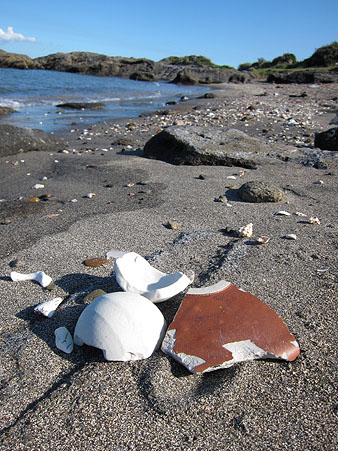
The button was discovered in 2008 on the western side of the Miura Peninsula, opposite Tokyo and near the Yokosuka US Naval Base. This location was subjected to heavy bombing near the end of the war. Alongside the button, remnants of ceramic hand grenades and land mines were also found—evidence of the peninsula’s turbulent history.
Ceramic hand grenades washed up on the Miura Peninsula in 2012, Photo courtesy: 拾い物 (found in nature)
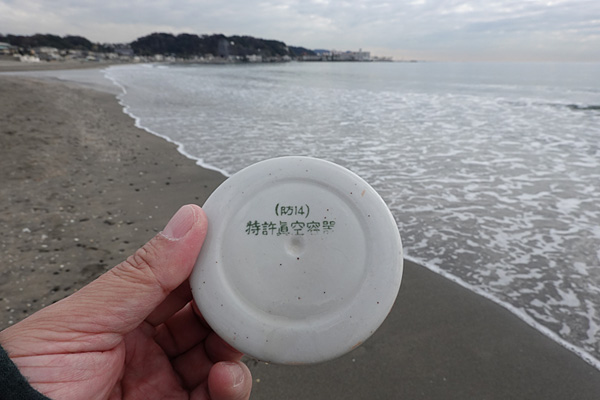
WWI Ceramic canning lid, courtesy of 花鳥風月のヒロイモノ
A Bottle and a New Interpretation
Adding to the mystery, the beachcomber found another artifact: a glass bottle with Kimi Ga Yo embossed on its front, used for grey hair dye. The label’s choice of words raises intriguing questions. In this context, Kimi could be interpreted as an endearing term used by a lover to address a woman, suggesting a new twist in meaning: “Your Time in Life.” The shift in interpretation showcases the flexibility and emotional depth of the phrase, even when applied to everyday objects.
A Legacy of Continuity
The title “He Shall Reign” evokes the powerful line from Handel’s Hallelujah Chorus—“And He shall reign forever and ever.” The enduring nature of both Kimi Ga Yo and Handel’s refrain invites reflection on themes of continuity, reverence, and cultural legacy. Despite being rooted in different places and eras, these two expressions share an enduring resonance.
In the 21st century, the connection takes on new dimensions. At the 2008 World Figure Skating Championships in Göteborg, Sweden, Swedish singers performed an a cappella rendition of Kimi Ga Yo during the Ladies’ Medal Ceremony. In this performance, the song transcended its original national context, connecting audiences across time and cultures with its universal message of endurance and continuity.
The discovery of a glass button bearing Kimi Ga Yo, washed ashore and preserved by chance, is a testament to the enduring power of words, symbols, and cultural memory. From a wartime artifact to a curious glass bottle, each find tells a story of resilience, transformation, and an ever-present thread linking past and present.
He Shall Reign—forever and ever—through words, symbols, and time.
As a button collector, I was intrigued by the beachcomber’s discovery and caught the bug myself. In early 2023, with the help of my sister and my button friend in Japan, I found an old box of electroplated glass uniform buttons, some bearing the same back mark.

 ボタン愛好家のグループ Western Regional Button Association (WRBA.us) の日本の会員さんが見つけてくださったブログ「花鳥風月のヒロイモノ」の掲載記事でその存在を知りました。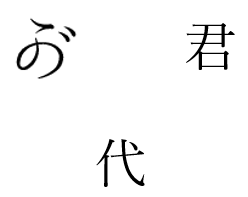
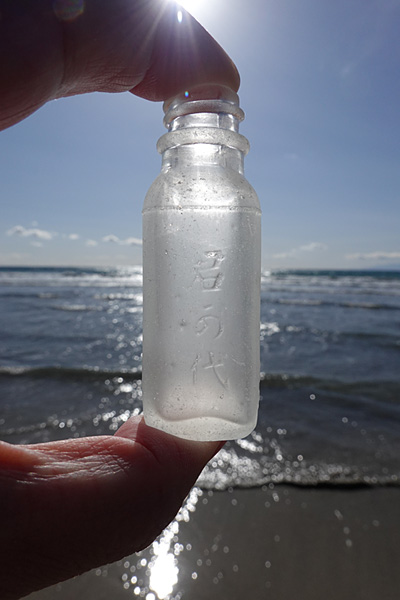 話はそれますが、同じブログの筆者さんが見つけられた小さな白髪染めの瓶もご紹介くださいました。君が代という白髪染めブランドがあったんですね。千代に八千代に若くあらんとの願いを込めるには、なかなか相応しいではありませんか。
 2024年秋までの4年間、オレゴン翻訳通訳連盟(OSTI)のディレクターを務めてきました。